High-Level Thinking: Nine UK Homes That Gave the Doorway Overhang a Job
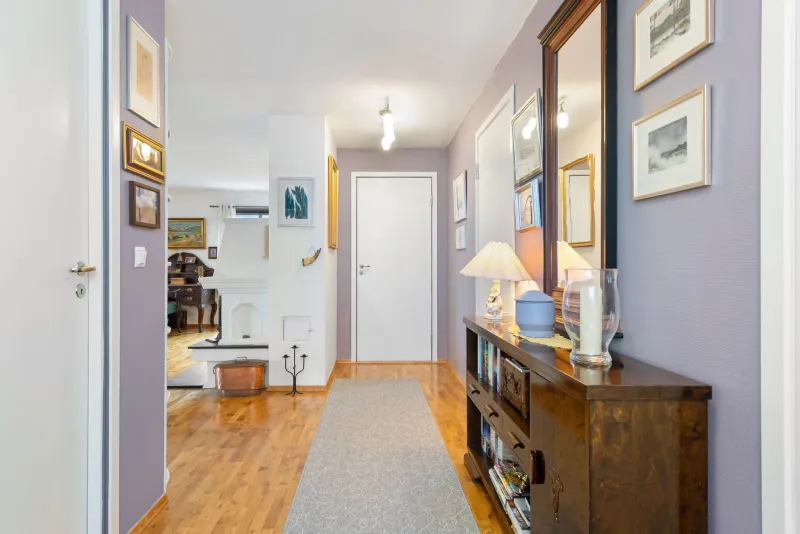
Every hallway has one: the strip of wall above a doorway. It is too high for a decent picture, too shallow for a cupboard, and just low enough to collect a grey fur of dust. For years it has been the interior equivalent of the top shelf in the fridge — technically space, practically ignored.
But a small crop of UK homeowners have started giving it a job. Not a dramatic one. No one is installing a wine rack above the loo. The appeal is quieter: a shelf for the things you want out of reach, a light that makes a corridor feel less like a tunnel, a bit of display that doesn't eat floor space. Here are nine approaches, plus the practical bits you need to know before you get the drill out.
The rules before the romance
Above a door, you are usually working with 30–45cm of height in older homes and sometimes less in newer ones. Depth is the bigger constraint: anything beyond about 15–20cm starts to feel like a hazard when you carry laundry through. Fixings matter more than style. In a period property, you may be drilling into a lintel, a timber stud or lath and plaster; in a new-build, it is often plasterboard over metal studs. Use the right anchors, find the solid bits, and don't hang anything heavy above a door that people pass under daily. Fire doors are non-negotiable: don't obstruct the self-closer, don't screw into the door or frame, and check before adding anything in a rented flat or HMO. If in doubt, ask.
Shelf life, but shallow
-
In a Bristol Victorian terrace, a 12cm oak ledge above the living-room door holds postcards, a small clock and a couple of ceramics. It is fixed into the lintel and painted to match the wall, so it reads as trim rather than storage.
-
A Glasgow tenement flat took a different route: the original picture rail was continued over the door, with small framed prints hung on fine chains. Nothing projects more than a few centimetres.
-
A 1930s semi in Leeds uses a slim floating shelf above the kitchen doorway for cookbooks — the ones consulted weekly, not the whole collection. The shelf stops short of the door swing and has a small lip.
Light touch
-
A Cardiff new-build hallway had no natural light and a blank over-door wall. A rechargeable picture light now washes a single large tile, giving the corridor a focal point without wiring.
-
In a Sheffield rented flat, the tenant used a removable adhesive hook and a lightweight paper lantern above the bedroom door. It is deliberately low-value and easy to remove at the end of the tenancy.
Display with a difference
-
A Norwich cottage turned the space above its bathroom door into a narrow plate rail — display only, not storage — for a rotating set of small plates. Moisture is the enemy, so the rail is sealed and the plates are not precious.
-
A Belfast townhouse runs a clip rail above the children's bedroom door for rotating artwork. The clips are changed weekly; the wall stays intact.
-
An Oxfordshire barn conversion used a reclaimed beam as an over-door shelf in a bedroom, holding a small speaker and a bedside clock for the guest room. It is deeper than most at 18cm, but the door is set back in a thick wall, so there is no head-bump risk.
-
An Edinburgh flat added a slim shadow box above an internal hall door for a small collection of pebbles and a postcard. It is shallow, glazed and screwed into a timber batten, so it stays put without turning the doorway into an obstacle course.
What actually works
The pattern is clear: the over-door wall rewards lightness, shallowness and a bit of restraint. A shelf deeper than a paperback, a frame that juts out at head height or a heavy pot above a busy route is asking for trouble. Picture rails and clip rails are the least intrusive options; battery or rechargeable lights are the easiest win in rentals; and a single, well-lit object often does more than a row of small clutter.
Cleaning matters too. Anything up there will gather dust, so choose surfaces you can reach with a microfibre cloth and a step stool — not a full reorganising session. And if the wall is the only thing between you and a fire door closing properly, leave it alone. The strip above a door is not a cupboard. It is a place for the light, the small, the changing and the slightly out of reach — and that is quite enough.