Upstairs, Unlocked: Nine UK Landings That Became Rooms You Actually Use
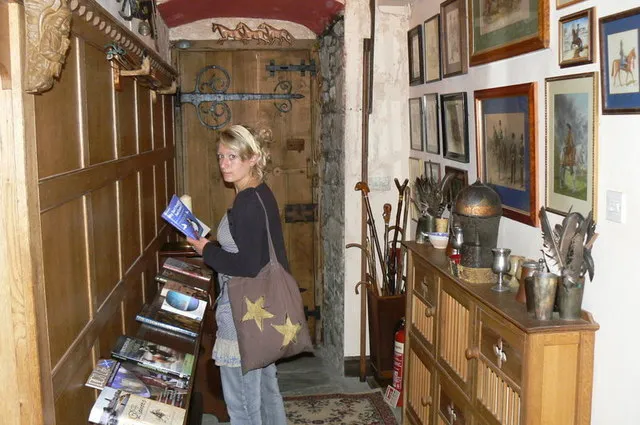
Photo: Malcolm Carruthers, CC BY-SA 2.0, via Wikimedia Commons
Most British landings are asked to do an impossible job: be a corridor, a laundry drop, a loft hatch, a smoke alarm and a route to the bathroom, all in about two square metres. No wonder they end up ignored. But in homes where every downstairs inch is spoken for, the landing is often the last bit of floor you already own. The trick is not to cram a room into it. It is to give it one clear job, then protect the thing it must never stop doing: getting people safely from A to B.
We asked nine UK homes what they did with theirs. Some spent a weekend; a couple spent a few hundred pounds; none knocked down walls. Here is what worked.
Why the landing is worth a second look
The landing has one huge advantage over a converted loft or a shed at the end of the garden: it is already inside the house, already heated, and already on the way to the bedrooms. That makes it ideal for the small, everyday jobs that otherwise clutter a spare room or the kitchen table. A place to read for twenty minutes. A desk for the admin nobody wants to do downstairs. A bench where a child can pull on shoes without sitting on the stairs.
The catch is that every one of these jobs has to coexist with circulation. A landing cannot become a room you have to squeeze past. So the best makeovers are modest, fixed, and deliberately shallow. Think bench seats rather than armchairs, wall-mounted desks rather than freestanding ones, and shelves that stop below eye level.
Nine landings that earned their keep
1. South London, Victorian terrace. A skylight over the stairwell was the only natural light on the landing, so the owners built a shallow window seat beneath it — about 45cm deep, with a lift-up lid for bedding. A plug-in wall light means it works after dark, and a sheepskin throw makes it look less like a built-in. The bench stops short of the top step; nothing overhangs the stairwell.
2. Bristol, 1930s semi. The return — that short leg of landing between two flights or beside the bathroom — became a 90cm desk. It is wall-mounted, with a slim drawer unit underneath and cable trunking painted to match the wall. The chair tucks fully under, so the bathroom door still opens wide. A simple angled task lamp handles evening paperwork.
3. Leeds, back-to-back terrace. This landing was too narrow for furniture but wide enough for books. The solution was a run of shallow shelves above the dado and a slim bench below, no deeper than a radiator. It gives the landing a library feel without stealing walking space. A wool runner softens the echo.
4. Glasgow, tenement flat. A tall sash window at the turn of the stairs was doing nothing but letting in draughts. The owners added a window seat with a deep cushion and full-length curtains that can be pulled at night. It is now the morning coffee spot. The radiator was left alone, with a clear gap above it so heat can still rise.
5. Norwich, low-ceilinged cottage. Headroom ruled out a desk or a chair, so this landing became a gallery wall instead. A slim console — no deeper than 20cm — holds a lamp and a bowl for keys, while framed prints fill the wall. It feels purposeful without asking anyone to duck.
6. Sheffield, maisonette. A teenager's keyboard moved up from the living room, along with a pair of headphones and a small acoustic panel. The keyboard sits on a wall-mounted shelf at standing height, and a rug underfoot takes the edge off the sound. The rule was simple: no amplifier, no late-night speakers, and nothing left on the floor.
7. Cardiff, townhouse. The landing is now a shared homework station: one long, narrow desk under the window, two stools that tuck underneath, and a pinboard above. A dimmable wall light means it can shift from after-school bright to bedtime low. The desk is fixed to the wall, not propped on legs that people trip over.
8. Edinburgh, flat. This landing had a generous alcove beside the hot water tank cupboard. The owners added a mirror, a shallow drawer unit and a small stool — a dressing corner that keeps hairdryers and school uniforms out of the bedroom. The cupboard door still opens fully, and the mirror is fixed flat to the wall.
9. Manchester, new-build. A plain landing with a window at the end became a reading corner with a built-in bench and a single shelf for paperbacks. There is no radiator in the way, no trailing flex, and the bench is painted the same colour as the wall so it disappears. At night, a rechargeable wall light gives just enough glow to read without lighting up the whole stairwell.
The rules that made them work
Stairwell safety comes first
Every one of these landings kept a clear route to the stairs. That means no furniture overhanging the top step, no stacks of boxes at the turn, and no cables crossing the walking line. If you are adding a bench or desk, fix it to the wall and keep it shallow. Do not block the balustrade, and do not use the space above the stairwell for heavy storage. A landing is a circulation route before it is anything else.
Work with the radiator and window
Landings are often cold, bright, or both. A desk directly under a window can mean glare in summer and a cold back in winter; a bench directly over a radiator can block heat. The homes above tended to put seating beside the radiator rather than on top of it, and used curtains or a sheer blind to take the edge off strong light. If you are boxing anything in, leave room for air to move.
Sound travels further than you think
A landing is a hard, echoey space, and sound drifts straight into bedrooms. Rugs, runners, curtains, soft bench cushions and a solid door all help. One of the Sheffield homes added a single acoustic panel behind the keyboard; it is not a recording studio, but it takes the sting out of practice time.
Light for day and night
The best landings had two lighting moods: daylight from a window or skylight, and a low, warm layer for evenings. Wall lights, plug-in sconces, rechargeable picture lights and dimmable bulbs all work. Motion-sensor lights are handy for night trips to the bathroom, but keep them low-level so they do not glare down the stairs.
What to steal for your own landing
Start with one job. Measure the clear walking route and treat that as sacred. Choose furniture that is shallow, fixed and visually quiet. Then spend whatever is left on lighting and a rug — the two things that make a landing feel like a place to pause rather than a corridor with a job. The square metres are already there. You may as well use them.